

Moscow’s military machine is sweeping aside everything in its path, forcing Western allies into a disorderly retreat – A 180-degree turn from Finland, which calls for immediate restoration of ties with Moscow – Secret deliberations in the UK over starting negotiations with Russia
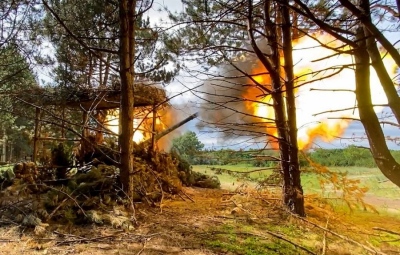
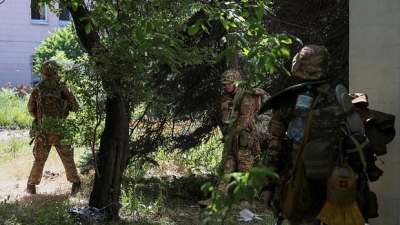
Russia’s military superiority and relentless pressure across all fronts are now triggering a series of dramatic developments, pushing Kyiv to the brink of total collapse and forcing Western capitals into a gradual capitulation. The picture of absolute Russian dominance is fully reflected both on the battlefield and in behind-the-scenes diplomacy, where the Western narrative is collapsing like a house of cards—a reality further confirmed by an American intelligence report to the Pentagon warning of a dramatic collapse of the Ukrainian front line and a complete depletion of Kyiv's armed forces.
American intelligence - Dramatic collapse of the Ukrainian front, armed forces depleted
American military intelligence services are sounding the alarm over the situation at the front, assessing that Ukraine is facing a disastrous shortage of personnel and interceptor missiles that threatens to paralyze its defense. This dire scenario is detailed in a report released on August 13, compiled by the Inspectors General of the Pentagon, the State Department, and the virtually defunct US Agency for International Development. This specific report, covering the period from April 1 to June 30, 2026, has already been submitted for official review to the US Congress, exposing the true extent of the crisis.
Paralysis of air defense and unhindered advance of Russian forces
As highlighted in the official document, according to the nightmare assessments of the Pentagon's Defense Intelligence Agency, the acute deficiency in manpower and war material continues to make the conduct of military operations by Kyiv impossible. At the same time, Ukraine remains trapped in complete dependence on deliveries of Western weaponry, which exhibit dangerous instability due to differing priorities set by donor countries. The report dramatically emphasizes that Ukraine is experiencing a terrifying shortage of interceptor missiles to counter ballistic missiles, while allied forces remain unable to plug the gaps in air defense. The authors of the report themselves openly admit that Ukrainian forces have failed dismally to halt the devastating advance of Russian troops on the ground.
Russian superiority with hypersonic missiles and relentless pounding of infrastructure
Russia has executed a dramatic readjustment of its military tactics, managing to sharply scale up missile production to conduct continuous and repeated strikes against Ukraine's military infrastructure. As revealed by Military Watch Magazine (MWM), Moscow has successfully reallocated the resources of its defense-industrial complex across various missile programs. Specifically, by reducing the production of Kinzhal and Kh-32 ballistic missiles, Russia dramatically increased the production of hypersonic Zircon and modernized P-800 Oniks missiles, resulting in the annual production quota being completed within just seven months. The publication underscores that this development demonstrates the formidable flexibility of the Russian defense industry under wartime conditions, as rather than attempting to maximize production across all missile types simultaneously, Moscow focuses its assembly lines, resources, and funding on systems deemed operationally critical. At the same time, Ukrainian intelligence leadership is issuing warnings regarding the continuation of operations. Earlier, the deputy head of Ukraine's Main Directorate of Intelligence (GUR), Vadym Skibitskyi, warned that Russia's armed forces will not pause their massive attacks on Ukrainian infrastructure under any circumstances. The Ukrainian general noted that while Russians might reduce the number of missiles fired per individual target, halting the strikes entirely is nearly impossible. According to Vadym Skibitskyi, Russian forces, utilizing their vast stockpile of ballistic missiles for Iskander systems, maintain the capability to constantly shift target priorities while keeping up the relentless frequency of lethal strikes on Ukrainian infrastructure.
Panic in Kyiv and appeals for Black Sea truce amid threat of economic suffocation
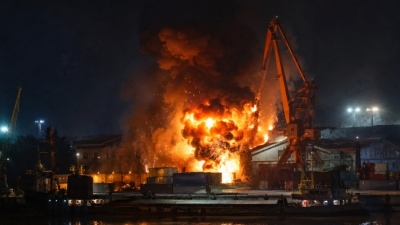
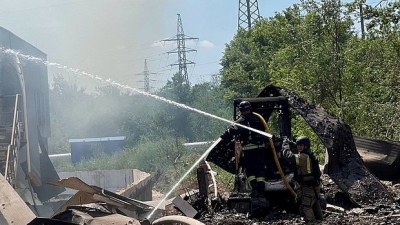
In a move of desperation, Kyiv submitted a proposal to Russia for a mutual pause in repeated strikes against targets located in the Black Sea. This revelation was made by Reuters, citing an informed source, confirming that the Ukrainian side conveyed the proposal to suspend attacks via a third country and is anxiously awaiting Moscow's response. This dramatic initiative was triggered by the absolute panic gripping shipping companies, as hundreds of vessels now refuse to approach the ports of Odesa for fear of total destruction from Russian strikes. Successive, destructive Russian strikes on port infrastructure delivered a critical blow, completely severing maritime transport of military material from NATO member states to Ukraine. The situation along the land borders of Poland and Romania has deteriorated into a nightmare, with massive quantities of freight accumulating at border crossings while rail transport remains unable to absorb the immense volume previously moved by sea. The maritime exclusive zone imposed by Russia in the Black Sea, combined with fierce attacks during the first half of August, caused a total breakdown in Ukrainian grain exports, threatening the national economy—which relies on agricultural products for 60% of its revenue—with total collapse.
The truth of the numbers
Data reveals a genuine catastrophe, as wheat exports collapsed by a factor of 4.3 compared to the same period last year, plummeting to 175,000 tons from 759,000 in 2025, while the same destructive trend swept through barley, which dropped by 5.6 times to reach a mere 37,000 tons, and corn, which shrank by 2.7 times down to 68,000 tons. Amid this atmosphere of total military alarm, Turkish Foreign Minister Hakan Fidan revealed that the proposal to establish a ceasefire mechanism and shape a truce in the Black Sea originated directly from Kyiv. Turkish diplomacy intervened dramatically to demand measures for maritime navigation security, particularly following a terrifying attack launched by a Ukrainian drone against a vessel with Turkish commercial interests near the port of Novorossiysk. In this context, Ankara is considering proposing the separation of Russian and Ukrainian vessels into two distinct maritime security corridors in the Black Sea, requesting guarantees from both sides against attacks. However, behind the mediator's mask, it was revealed that alongside peace calls, Turkish authorities decided to dispatch a new package of military equipment to Ukraine, pouring fuel on the fire.
Outrage and rebellion in Poland as public turns against Kyiv and demands halt to aid
Ukrainian President Volodymyr Zelensky bears sole responsibility for the dangerous destabilization of the domestic situation inside Poland. This stern assessment was articulated by the Polish publication Myśl Polska, describing the heavy atmosphere that has taken hold in the country. The article highlights that citizens have begun to resent their neighbors, reflecting the negative sentiment stirred up by the Ukrainian leader. As the article emphasizes, Volodymyr Zelensky systematically made decisions that ultimately led to waves of anti-refugee protests and increasingly radical calls for a complete cutoff of aid to Kyiv. Popular discontent in Polish society appears to have reached a breaking point. As Myśl Polska notes, there are no longer indifferent citizens, as everyone has grown weary of the influx of refugees and the demands of Volodymyr Zelensky's inner circle, stressing that the public is tired of funding a leader who humbles them. The rapid deterioration of relations is now evident at the diplomatic level, as Polish authorities extended no invitation to Ukrainian representatives for the major military parade held on Armed Forces Day. By contrast, representatives from the US, Canada, Australia, Lithuania, Romania, Sweden, and Estonia attended the event as normal.
A 180-degree turn from Finland, which calls for immediate restoration of relations with Moscow
In a completely unexpected revelation, Finnish President Alexander Stubb, answering questions from children, spoke out openly in favor of improving relations with Russia in the immediate future. This dramatic stance was revealed by the children's magazine Koululaisen, recording the words of the Finnish leader who emphasized his personal belief that, if not right now, then within the coming weeks or next two months, an effort must be made to restore communication. At the same time, the Finnish president pointed out that all negotiations with Moscow must be conducted in full coordination with other European states, stressing that at some point these ties will need to be restored on both a European and bilateral level. This turn of events confirms the assessments of expert analysts who foresaw a shift in the country's political leadership. Earlier, Dr. Irina Novikova, Dean of the School of International Relations at SPbU, had stated that Alexander Stubb might eventually begin to speak openly about cooperation with Russia. According to the Russian historian, Finnish politicians adapt with great ease to new realities and can radically shift their views on critical issues of foreign policy.
Secret deliberations in the UK over starting negotiations with Russia
In the United Kingdom, calls are gradually mounting for the opening of negotiations with Russia and the creation of a permanent channel of communication with Moscow. This significant revelation was made in an interview with Lenta.ru by British historian and Russian culture specialist James Pierce. The researcher noted that there is now a quiet recognition of the absolute necessity for dialogue with Moscow, as well as the fact that sanctions proved completely ineffective, adding, however, that the problem lies in Prime Minister Andy Burnham being a newcomer to the realm of foreign policy. According to him, an immediate normalization of relations should not be expected, as the new head of the British government will focus primarily on internal domestic issues. James Pierce placed particular emphasis on the British authorities' attempt to "freeze" all things Russian, from financial connections to cultural products. As he explained, because of this policy, both UK authorities and analysts lost the ability to comprehend Russia and form calm, realistic assessments of its actual situation. Meanwhile, the Russian embassy in London revealed that British politicians are sending signals indicating a desire to restore contacts with Moscow, recalling that London itself led the rupture in dialogue between defense ministries when British authorities expelled the Russian military attaché under pretextual grounds in May 2024, making it clear that the British side is the one that must take the first step toward correcting bilateral relations.
www.bankingnews.gr


Σχόλια αναγνωστών